
The Global Technology Industry Association (GTIA) has put together a Managed Intelligence Alliance to help MSPs and other channel partners shape the development and governance of AI.
The founding members of the alliance are CMIT Solutions, CrowdStrike, Cynet, F1 Information Technologies, Lyra, Microsoft, New Charter, NinjaOne, Pax8, Rev.io and Sourcepass. Pax8 corporate VP of community and ecosystems Rob Rae chairs the alliance. GTIA named Carlo Tortora Brayda, VP of industry standards and director of the alliance to lead its day-to-day operations.
Brayda said the alliance’s mission is crucial to the channel and the entire IT industry.
“We’re at an inflection point as a human species,” Brayda said. “AI, as we have it now, is equivalent to the invention of fire. It’s a pivotal moment, much like the one in our earliest days that enabled our brains to grow and us to develop as a species. It’s the new operating system for humanity. It’s the glue that interconnects small businesses, people, and governments as a common denominator. The implications are ginormous.”
I conducted a sweeping interview with Brayda to understand the details of this group with “ginormous implications.”
Why is this alliance necessary now, and why is the channel the right place for it?
Brayda: Standards are what turn innovation into an industry. Right now we’re operating without them. Standards will industrialize the MSP, tell it what to do on a Monday morning, and make it legitimate and credible. They’ll give confidence to the buyer. What we’re doing is essential, and nobody else is approaching it this way. We’re working where the rubber meets the road, where the MSP engages the SMB. That’s the big gap the Managed Intelligence Alliance is filling.
Something like this has to live inside an organization that is nonprofit, vendor neutral, and international. We will not bow to the needs or wants of any one corporation, no matter what. Our purpose is clear and noble, and neutrality is central.
What will this alliance do for MSPs?
Brayda: Individuals and SMBs don’t really know what they want out of AI, so they reach out to MSPs for guidance. Some MSPs have a clear understanding of what they need to do and how, but the vast majority don’t because it’s new and the frontier models change every other month. It’s like walking down an escalator that’s going the other way. There’s a little bit of chaos in the industry. The customer doesn’t quite know what to buy, and the MSP, the trusted advisor, doesn’t quite know what to sell.
What we want to do is provide guidance by pulling in the consensus of the channel. We want this to be a channel-wide initiative that lets the industry self-regulate, define what being a managed service provider for AI really means, what standards we should operate against, what is needed in the customer environment, and what can be deployed to customer satisfaction.
What can the alliance do to put controls in place, and win trust in AI?
Brayda: Winning trust is ultimately what MSPs have to do with the end user. They already have a relationship of trust, but it doesn’t yet extend to deploying AI. AI is still seen as dark and dangerous to implement for many obvious reasons, especially with the agentic revolution.
GTIA provides a home for this initiative: organizing the market, setting standards, defining capability standards and what good looks like, and providing guidance, playbooks, and toolkits so MSPs can deliver AI value with confidence. We’re not doing this from an ivory tower. It’s an industry-wide initiative, and there’s been tremendous interest from the whole industry since the announcement. Everybody wants to be involved. It’s the industry coming together to organize itself, under the governance and vendor neutrality that only GTIA can provide as a nonprofit that is truly vendor neutral and global. Standards will only be considered legitimate and adopted by the industry if they’re developed that way.
How much do you need the cooperation of the LLM companies, such as Anthropic and OpenAI? How much can MSPs do without them?
Brayda: They can do a lot. It’s up to [the channel], because the LLM companies are so far removed from where the rubber meets the road at the SMB level. They don’t know the MSP channel, and they don’t know how MSPs deploy technology inside the SMB. It’s two different worlds.
Standards already exist. I come from the world of standards and from the United Nations, and I can tell you that standards are usually developed with governments, academia, and the highest levels of thought leadership. There’s a strong AI standard, ISO 42001, which is an excellent foundation, but it isn’t designed for the reality of an MSP serving its customers. So there’s a lot of work to make it usable: building crosswalks, doing mappings, creating new specifications, and selecting from the multiple existing standards. The work of the alliance will be to design the standards, and then to design the way MSPs can use them in their go-to-market and to satisfy customer requirements.
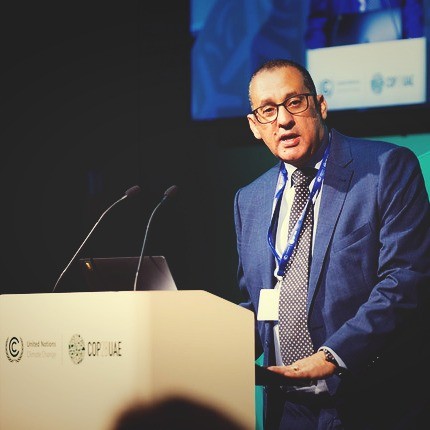 Carlo Tortora Brayda
At ChannelCon, GTIA announced it was joining the UN’s AI for Good program. What’s the relationship between that group and the Managed Intelligence Alliance?
Brayda: The two are separate initiatives. AI for Good cultivates the responsible use of AI across the world, which is a purposeful and noble thing for GTIA to be involved in. Building standards is a different part of the United Nations’ work. I’m the common denominator, because I come from the UN world and I brought AI for Good to GTIA.
Building standards will be an industry-wide effort with outreach to the UN, NIST, and academia around the world. We’re talking about empowering the SMB channel, made up of MSPs globally, to engage the end customer correctly. This is the AI industry in 2027 and 2028, and the guidelines will be driven by this program. We can’t do it alone, and we can’t do it with input from our own industry only. We have to open dialogue with the UN’s standardization bodies, NIST, and every other organization doing this kind of work.
What about governments? If you’re going to have regulations, how much do you need to involve governments? This is already a political issue. Are you going to be a lobbying group as well?
Brayda: The idea is that if we don’t regulate ourselves, somebody in Washington will at some point impose regulation on our sector that might not be the most appropriate. As an industry, we want to take the future into our own hands. That’s the will of GTIA’s membership. We want to design the way the future engages us.
The Managed Intelligence Alliance may well be the precursor to a voluntary self-regulatory organization, where the industry regulates itself. That’s absolutely a possibility. But we’ll need to engage with government, in the United States and in other countries. You cannot transform the biggest technological revolution in the lifeblood of every economy, the SMB sector, independently of government. We’ll need open dialogue with government, civil society, international organizations, academia, and industry across the spectrum.
That could be the hardest part.
Brayda: It can be, but it doesn’t have to be. Having worked with governments for much of my life, through the World Economic Forum and the United Nations, what I’ve seen is that the government counterpart is just another one of us in a different job, with the same eagerness to do what is right for the world, given whatever constraints they’re under. The willingness is certainly there. Translating it into action is down to us as a global nonprofit, and we’ve set up the governance to do that. We have an executive council, we’re spinning up a technical steering committee, and we’ll have multiple working groups to get buy-in, enthusiasm, and advice across the membership, and beyond it as well.
What are the next steps? How shall we measure your progress a year from now?
Brayda: There’s no magic wand. It’s going to be really hard because it involves a lot of people and will take a lot of time. Before Christmas, we plan to stand up the executive council and convene it perhaps twice. We’ll also stand up the first technical steering committee and define the workstreams and the longer-term plan. Twelve months from now, we hope to have published some specifications and clear playbooks that enable channel partners worldwide to engage on AI correctly. That will be the beginning, not the finish line, because designing, setting, and adapting standards, which is probably what we’ll do most, is an ongoing process.
Designing standards for a future this fast paced requires discipline around two human values: agility and adaptability. Without them built into the DNA of the Managed Intelligence Alliance, we won’t succeed. We need a governance, engagement, and outreach system that is agile and adaptable and never compromises on the ethical values and guardrails that define what safety means. We’re now in the business of recursive self-improvement, which will be the reality of 2027, and things will change at double, triple, or 10 times the speed of the last 12 months. We’ve got to brace for change.